Street Photography Ethics: A Practical Explainer on Consent, Privacy, and Public Space
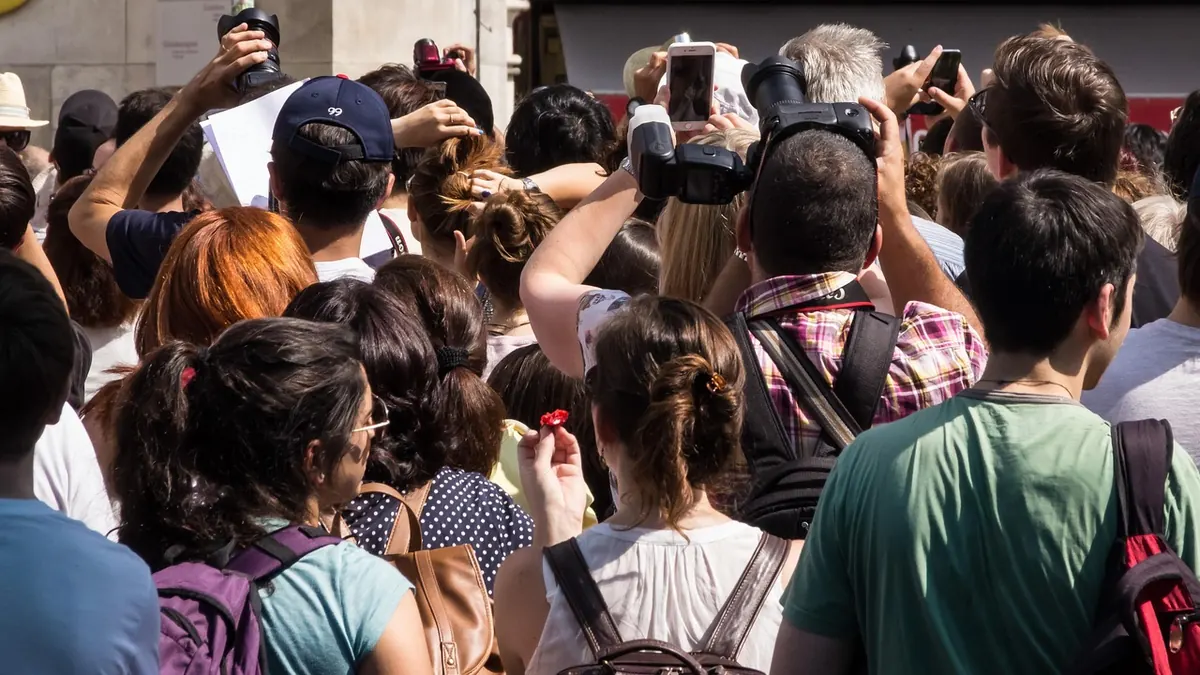
You see him before he sees you: a man in a paint-flecked jacket, leaning against a delivery van, lit by the last decent light of the afternoon. The camera is already at your eye. Then he turns, and in the half-second before the shutter you have to decide something no manual covers. Take the frame? Nod? Lower the lens?
Street photography lives inside that half-second. The craft gets the attention; the ethics get the arguments. What follows is a working set of principles for keeping your pictures honest and your conscience reasonably clear.
Consent Is Not a Binary Switch
Most advice on this treats consent as a yes-or-no box, which is useless at a crosswalk. Consent arrives in gradations, and reading them is part of the craft.
When a glance is enough
In a genuinely public place — a market, a parade, a busy platform — someone who notices your camera, holds your eye, and goes back to what they were doing has effectively given you permission. So has the person who lifts their chin at you or gives a small shrug that means "go on then". That is the ordinary licence street photography runs on, and it holds well enough for wide shots, gestures, crowds, the back of a head, the shape of a city.
When to ask first
Ask when the picture is really about one person: a face filling the frame, a portrait, an intimate gesture. Ask when your subject is a child. Ask when you want to use the photo for anything commercial, or when the answer would be awkward to hear after you have already pressed the button.
And learn to read the thing that is not consent: a hand raised toward the lens, a turned shoulder, a frown, a coat pulled tighter. That is a no, even when it is silent. Lower the camera, smile, keep walking. Don't turn it into a negotiation, and don't shoot anyway because the frame was good. The frame being good is not the point.
Privacy Does Not End at the Pavement
People who step outdoors do not agree to become content. They agree to be seen. The gap between those two things is where most ethical trouble starts.
Someone buying bread in a bad mood, or crying on a station platform, is not asking to be a picture. Photographing them is not automatically wrong — the crying-on-the-platform frame can be a real photograph — but it comes with an obligation to think about what publication does to them.
Rules vary widely between countries and cities, and they can differ sharply between editorial, artistic and commercial use. Don't take a photography forum as legal advice. If you plan to sell a picture of a stranger for advertising or use it in a campaign, check your local rules and speak to someone qualified. For ordinary editorial and personal work, the practical test is simpler: is this person recognisable, and would they mind? If yes to the first and probably to the second, you need a better reason than "it's legal".
The Vulnerability Test
Before the shutter, run one question: is this person in a position to say no to me? If they are ill, sleeping rough, drunk, undressed, grieving, being arrested, or simply much younger or much older than you, the answer is usually no. Photographing them may not be illegal. It is often unkind, and unkind photographs outlive the moment that made them seem compelling.
This is not an argument for sanitising the world. Poverty, illness and public life are legitimate subjects, and photography that ignores them is poorer for it. But think about who carries the cost of the image. Would you photograph a friend in that position? Would you want the same frame of yourself on a gallery wall? If not, the picture needs a strong purpose, and often a conversation first.
Editing Is Where Ethics Get Quiet
Most arguments about street photography happen at the moment of capture. Most of the actual damage happens later, at the desk, where nobody is watching.
Cropping is the big one. Cut the context out of a frame and a person becomes a type: the tired worker, the shifty kid, the drunk. Leave the context in and the same person becomes a human being in a specific place. Crop for composition by all means, but notice when you are really editing meaning.
Captions do the same work more explicitly. Write only what you know. "A man waiting outside the station" is honest. "A homeless man outside the station" is a claim you need to be able to support. Retouching deserves a line too: dust spots, a levelled horizon, a recovered highlight — all fine. Erasing a passer-by, pasting in a sky that was never there, or smoothing a stranger's face into someone they never looked like crosses into fiction, and fiction has to be labelled as such.
Approaching a Stranger Without Being a Nuisance
If you shoot first and talk second, the approach matters, and there is a decent way to do it.
- Go over within a few seconds. Wait until they have walked two blocks and the conversation becomes strange.
- Say one sentence. "I'm a photographer — I took a picture of the light on your jacket. Want to see it?" No pitch, no portfolio.
- Show the back of the camera. This is the most disarming move available to you. Most people relax the moment they see the frame.
- Offer an exit and a way to get the photo. "I can delete it right now, or email it to you." Then do whichever they choose, immediately.
- Leave when the answer is yes. Thank them, send the file, and skip the explanation of your artistic intentions.
Publishing, Tagging, and the Long Tail
A print on a wall is one thing. A photograph with a name, a location tag and a caption on the open internet is another, and it stays there.
If your subject is identifiable and not a public figure, don't tag or name them without asking. Don't post the exact location of someone's home or workplace. Don't attach an invented story to a face you don't know.
Have a policy for the message that eventually arrives: "That's me. Please take it down." A workable rule is to remove it unless there is a strong editorial reason not to, and to reply like a person rather than a rights-holder. You can be legally right and still behave badly. Then, when you repost or exhibit, the same questions apply again — the frame has a new audience and a new set of consequences.
A Short Field Checklist
None of this needs a philosophy degree. It needs the habit of pausing.
- Is the picture about a person, or about the place? Wide shots need less asking.
- Would they recognise themselves, and would they be fine with it?
- Is anyone here unable to say no comfortably?
- Does the caption claim more than I actually know?
- Can I explain this photograph to the person in it without flinching?
- If they asked me to delete it tomorrow, what would I say?
Good street photography isn't a record of what you got away with. It's a record of attention, and attention is a form of respect. When you can answer those questions cleanly, press the shutter. When you can't, there's another corner, another slant of light, another half-second coming along shortly.
Photo: meineresterampe / Pixabay