Finding Street Photography Stories in Small Towns: A Local Angle Guide
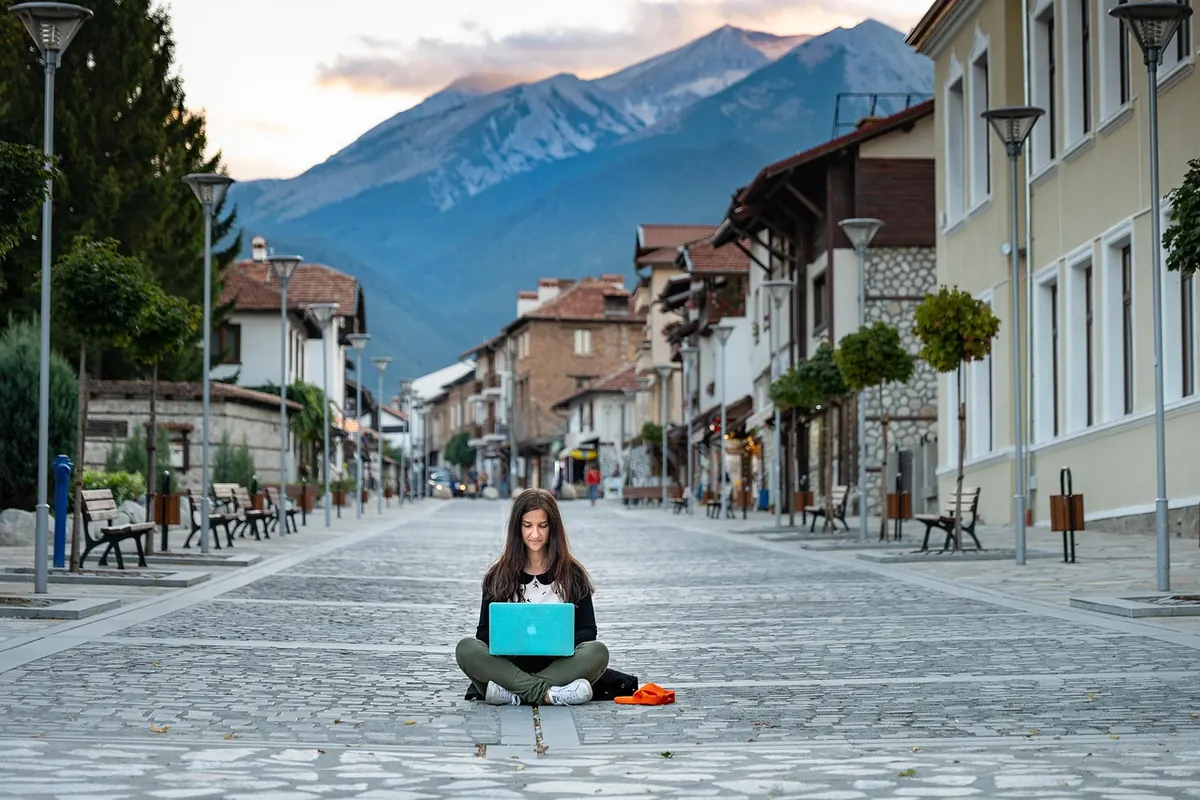
The main street empties by nine. The bakery has one customer, the barber is sweeping up, and a dog sleeps in the middle of the pavement. If you have been training on crowded corners, an empty high street can feel like a problem: no crowds to compress, no anonymous theatre, nobody to photograph. It isn't a problem. It's a different job, slower and more personal, built on repetition, local detail and knowing when the town's few gathering points actually fill up. Small towns don't hand you the picture on the first walk. They let you earn it.
Read the Town Before You Shoot
Start with a walk and no camera. Ninety minutes is usually enough to find out where a town pauses. A place of four thousand people doesn't have many spots where bodies overlap: the checkout at the small supermarket, the post office queue on pension day, the school gate at ten past three, the market on Saturday, the pub an hour after opening, the church steps on Sunday.
Note the geography of waiting. Which bench faces the sun in January? Where do delivery drivers eat lunch? Where do teenagers sit when they want to be seen, and where do they sit when they don't? Write it down, along with the times. Half of street photography in a small town is simply being on the right corner at 3:05 instead of 2:40.
Do the same for light. Narrow streets with tall buildings on both sides give you maybe two hours of usable direct sun. That shapes the whole day, so plan around it instead of fighting it.
Treat Local Detail as Cast Members
In a city, texture is everywhere and mostly anonymous. In a small town, the detail is specific and it belongs to people: the sign that outlived the shop it advertised, a window display arranged once in 2011 and dusted weekly since, a bicycle chained to the same railing for so long the owner has stopped seeing it. Chalkboards. Posters layered three deep on a lamp post until the years read as sediment. A noticeboard by the church hall, pinned with dog-walking numbers and a missing cat.
These things carry more information than a crowded crossing ever will. The trick is to stop them looking like postcards.
Three ways to shoot detail with intent
- Give it a human edge. A hand reaching into the frame, a doorway with someone half visible, a reflection carrying a passer-by. Scale and context turn a texture shot into a photograph.
- Shoot it twice. One wide frame that explains where you are, one close frame that isolates the thing itself. You will use both when you sequence later.
- Wait for interaction. The shopkeeper flipping the sign, the man unlocking the shutters, a kid running a stick along the railings. Detail plus gesture is a story; detail alone is a still life.
Find the People Who Repeat
Small towns have recurring characters, and that is an advantage. In a city you get one frame of a stranger and never see them again. Here, the woman who arranges flowers outside the church every Thursday will be there next Thursday. The man walking an old dog at seven in the morning walks it at seven every morning. That repetition lets you build something a single frame never gets: recognition.
Take it slowly, and be honest about what you are doing.
- First visit: no faces. Work on silhouettes, backs, hands and figures at distance while you learn the town's rhythm.
- Become familiar. Buy the coffee. Sit on the same bench. Be visible, boring and consistent. People accept a camera far faster than they accept a stranger.
- Ask once there is a rapport. Explain simply who you are, what the photographs are for and where they might appear. If someone says no, thank them and move on.
- Return with a print. A small print is worth more than a business card, and it turns the relationship from extraction into exchange.
Be careful with what you publish. In a small town an identifiable photograph travels quickly, and a person cannot dissolve into the crowd the way they can in a city. Skip images that could embarrass someone in front of their neighbours. Rules on photographing people in public vary by country, so check what applies where you are shooting rather than assuming the street is fair game.
Shoot the Pauses, Not Just the Action
Quiet stories live in the gaps: the minute before the bus arrives, a shopkeeper leaning in a doorway watching an argument across the road, two men on a bench saying nothing at all. On busy streets, action pulls your eye. On a near-empty high street the photograph is often in the stillness around it, so give stillness time to become interesting. Stand in one spot for twenty minutes. Most people break and move; the good frame usually arrives after the boredom does.
Practical settings help you stay invisible. A small body with a 35mm or 28mm lens, aperture around f/8 focused at two and a half metres, automatic ISO, exposure checked against the shadow side of the street. Set it all before you walk. Fiddling with dials in a quiet square is the loudest thing you can do.
Let the Weather Carry the Story
Low-density places make weather visible. Rain gives you reflections down a street with no umbrellas blocking the view; fog separates buildings into layers and hides the car park behind them; low winter sun throws long shadows across a road with nothing else on it. Even flat overcast light works, especially for detail, because there are no hard shadows eating into the shopfronts.
Wind is underrated: laundry, awnings, flags, a plastic bag caught on a railing. Seasonal days matter more here than in a city, too. Market day, the first warm Saturday, the week the fair arrives — a small town's calendar is short and worth marking in advance.
Edit in Sequences, Not Singles
Keep a folder per town and resist judging frames one at a time. Six to twelve pictures can hold a town's character in a way a single image cannot: the same doorway at three different hours, three people on the same bench, a walk from the bus stop to the church, the recurring dog. Look for threads while you shoot and you will find them while you edit.
Then do something with them. Print a short sequence, make a small booklet, ask a café whether they will pin a few prints on the wall. Feedback from people who actually live in the town is more useful than likes, and it usually sends you back out with better ideas.
A Field Routine for Your Next Visit
- Arrive early, walk a full loop with the camera off, and mark five places where people wait.
- Write down three times: when the school empties, when the market peaks, when the pub opens.
- Shoot one corner at two different hours on the same day.
- Give yourself a single detail assignment: signs, doorways or hands.
- Speak to two people. Ask what actually happens in town on a Saturday.
- Shoot for two hours, stop, review, then return to the same spot in the last light.
Do that over a few visits and the town starts to photograph itself for you. You will know which bench the light hits, which face you have seen three times, and which doorway is worth standing opposite for half an hour. That is the local angle, and it is not available to anyone just passing through with a camera.
Photo: coworkingbansko / Pixabay